

Description
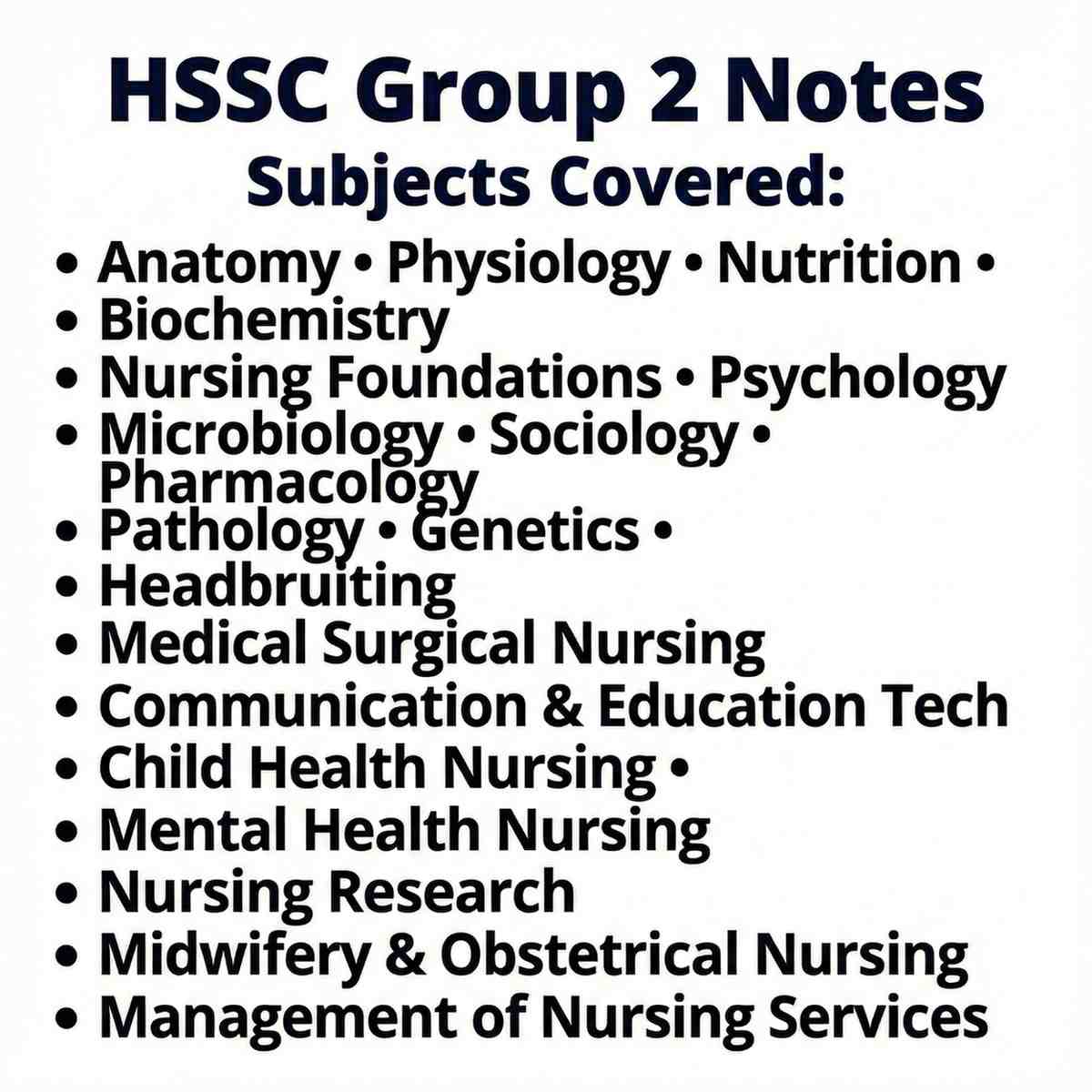
Syllabus for Nurse, Staff Nurse & Sister Nurse
Note: This exact syllabus is covered in our notes.
1. Anatomy
-
Introduction to anatomical terms
-
Organization of the human body
-
Skeletal system
-
Muscular system
-
Nervous system
-
Sensory system
-
Circulatory and lymphatic system
-
Respiratory system
-
Digestive system
-
Excretory (urinary) system
-
Endocrine system
-
Reproductive system (including breast)
2. Physiology
-
Cell physiology
-
Skeletal system
-
Muscular system
-
Nervous system
-
Circulatory system
-
Respiratory system
-
Digestive system
-
Excretory system
-
Sensory organs
-
Endocrine system
-
Reproductive system
-
Lymphatic and immunological system
3. Nutrition
-
Introduction
-
Carbohydrates, fats, proteins, energy
-
Vitamins and minerals
-
Water and electrolytes
-
Cookery rules and preservation of nutrients
-
Balanced diet
-
Role of nurse in nutritional programmes
4. Biochemistry
-
Introduction
-
Structure and functions of cell membrane
-
Composition and metabolism of carbohydrates
-
Composition and metabolism of lipids
-
Composition and metabolism of amino acids and proteins
-
Composition and metabolism of vitamins and minerals
-
Immunochemistry
5. Nursing Foundations
-
Introduction
-
Hospital admission and discharge
-
Communication and nurse–patient relationship
-
Nursing process
-
Documentation and reporting
-
Vital signs and health assessment
-
Machinery, equipment, and linen
-
Meeting needs of patients
-
Activities of daily living
-
Physiological needs
-
Fluid, electrolyte, and acid–base balance
-
Psychosocial needs
-
Infection control in clinical settings
-
Administration of medications
-
Care of perioperative patients
-
Care of patients with special needs
-
Care of terminally ill patients
-
Hospital management system
6. Psychology
-
Introduction
-
Biology of behaviour
-
Cognitive processes
-
Motivation and emotional processes
-
Personality
-
Developmental psychology
-
Mental hygiene and mental health
-
Psychological assessment and tests
7. Microbiology
-
Introduction
-
General characteristics of microbes
-
Infection control
-
Pathogenic organisms
-
Immunity
8. Sociology
-
Introduction
-
Individual and society
-
Culture
-
Biodiversity and its conservation
-
Social groups and processes
-
Population
-
Family and marriage
-
Social stratification
-
Types of communities in India (rural, urban, regional)
-
Social change
-
Social organization and social system
-
Social control
-
Social problems
9. Pharmacology, Pathology & Genetics
A. Pharmacology
-
Introduction
-
Chemotherapy
-
Antiseptics, disinfectants, and insecticides
-
Drugs acting on G.I. system
-
Drugs acting on respiratory system
-
Drugs acting on urinary system
-
Drugs used on skin and mucous membranes
-
Drugs acting on nervous system
-
Cardiovascular drugs
-
Hormonal drugs and supplementation
-
Contraception and medical termination of pregnancy
-
Drugs used in alternative systems of medicine
B. Pathology
-
Introduction
-
Special pathology
-
Clinical pathology
-
Examination of body cavity fluids
-
Transudates and exudates
-
Urine and faeces examination
C. Genetics
-
Introduction
-
Maternal, prenatal, and genetic influences on development
-
Genetic testing in neonates and children
-
Genetic conditions in adolescents and adults
-
Genetic services
10. Medical Surgical Nursing (Adult Including Geriatrics)
-
Introduction to medical–surgical nursing and asepsis
-
Common signs, symptoms, and management
-
Nursing management of patients with:
-
Respiratory disorders
-
Digestive system disorders
-
Blood and cardiovascular disorders
-
Genito-urinary disorders
-
Male reproductive system disorders
-
Endocrine disorders
-
Integumentary disorders
-
Musculoskeletal disorders
-
Immunological disorders
-
Communicable diseases
-
ENT disorders
-
Eye disorders
-
Neurological disorders
-
Female reproductive system disorders
-
Burns, reconstructive, and cosmetic surgery
-
Oncological conditions
-
-
Perioperative nursing
-
Emergency and disaster nursing
-
Critical care nursing
-
Nursing care of the elderly
-
Occupational and industrial health disorders
11. Community Health Nursing
-
Introduction
-
Determinants of health
-
Epidemiology
-
Communicable and non-communicable diseases
-
Demography and population control
-
Health planning, policies, and problems
-
Community health services
-
Community health nursing approaches
-
Roles and responsibilities of nursing personnel
-
National health and family welfare programmes
-
Health agencies
12. Communication & Education Technology
-
Communication process
-
Interpersonal and human relations
-
Guidance and counselling
-
Principles of education and teaching–learning process
-
Methods of teaching
-
Educational media
-
Assessment
-
Information, education, and communication (IEC) for health
13. Child Health Nursing
-
Modern concepts of childcare
-
The healthy child
-
Nursing care of the neonate
-
IMNCI
-
Common childhood diseases
-
Behavioural and social problems in children
14. Mental Health Nursing
-
Introduction and principles
-
Mental health assessment
-
Therapeutic communication
-
Treatment modalities and therapies
-
Nursing management of:
-
Schizophrenia and psychotic disorders
-
Mood disorders
-
Neurotic and stress-related disorders
-
Substance use disorders
-
Personality, sexual, and eating disorders
-
Childhood and adolescent disorders
-
Organic brain disorders
-
-
Psychiatric emergencies
-
Legal issues
-
Community mental health nursing
15. Nursing Research & Statistics
-
Research process
-
Research problems and questions
-
Review of literature
-
Research approaches and designs
-
Sampling and data collection
-
Data analysis
-
Introduction to statistics
-
Communication and utilization of research
16. Midwifery & Obstetrical Nursing
-
Introduction to midwifery and obstetrics
-
Anatomy and physiology of female reproductive system
-
Foetal development
-
Antenatal care
-
Intranatal care
-
Postnatal care and puerperium
-
Normal and high-risk neonates
-
Abnormal labour and postnatal complications
-
Pharmacotherapeutics in obstetrics
-
Family welfare programme
17. Management of Nursing Services & Education
-
Introduction to nursing management
-
Management process
-
Management of nursing services in hospital and community
-
Organizational behaviour and human relations
-
In-service education
-
Management of nursing educational institutions
-
Nursing as a profession
-
Professional advancement
Reviews
There are no reviews yet.